James Turrell Dan Flavin Doug Wheeler Robert Irvin Living With Art Comparison
Peter Ireland – 8 June, 2016
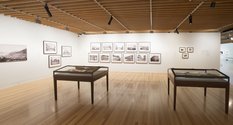
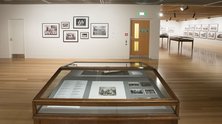
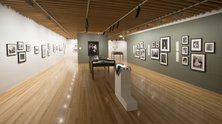
Beginning of all, big is not necessarily better, and as an exhibition it'south something of an endurance exam to process. Secondly, given the lay-out on Level five information technology's non easy to get your bearings as to where the show might start: the wall-sized introduction signage is over to the right, with galleries of photographs beckoning beyond, but straight alee is the gallery where the chronology largely ends. Thirdly, the larger, more general labels in each space intended to link the bodies of images are so general and having to embrace and so many unlike images and spans of fourth dimension they are almost meaningless.
Wellington
A selection from the national collection of 165 years of photography
New Zealand Photography Collected
6 Nov 2015 - 7 August 2016
Part I
"What came starting time, the chicken or the egg?" It's a colloquial statement of a classic dilemma. A new respond to the question, a child of the corporate world and destined to become a classic, avoids that pesky "or". As the Te Papa publicity department has it, the craven and the egg simply coincide. It's no coincidence though, that the Museum's biggest ever photography show has besides opened at the same time as the launch of a volume well-nigh its photography drove past resident photography curator Athol McCredie. And then, this exhibition is, fundamentally, an ad. The merely mode the show makes sense - can make sense - is as an adjunct to the publication.
The publication has been reviewed earlier on this site (1), just given the intimate relationship betwixt the book and the exhibition it's necessary to make reference to the former throughout this piece. Yet, the focus here must be on the exhibition, what information technology is as an exhibition, what its advent means for Te Papa's commitment to exhibiting photography and the institution's record on that score since the Museum opened early on in 1998.
For the bigger picture it'southward necessary to rails dorsum to the later on 1980s when an already well-advanced plan to build a new National Art Gallery on a site contrary Parliament became stalled in a afterthought of the site'southward future (two), and a small group of museum professionals and others took reward of the hiatus to promote a bigger concept of a combined gallery and National Museum initially denoted a Pacific Arts Center somewhere on the Majuscule's waterfront.
It was an '80s fad to combine galleries and museums, and while provincial centres such as Hamilton, Napier and Palmerston North succumbed to the fashion, none of the major cities opted for it. Have this as evidence or not, but in the decades since the Waikato Museum, Te Manawa and what'southward called MTG in Napier take never shown the initiative, energy and flair characterising them in the 1970s. All three still struggle finding an identity and their audience.
The big exception, of course, was Te Papa, and it's exceptional in two unique ways: firstly information technology'south the national museum, and secondly, being a child of the '80s, its organisational construction is uniquely corporate - the sexiest model going in that tempestuous decade - and a structure fundamental to the way Te Papa has developed and the source of nearly of its continuing problems.
The Te Papa project promised much. In order to sell the thought to both politicians and the general population - the building itself was to cost around $315 million dollars - its promoters' vision of the future was necessarily couched in terms that denigrated what the existing institutions of gallery and museum had been achieving - for example, in an early on website, the term "fuddy-duddy" was used to describe them. Te Papa was going to exist a vast comeback on dotard: vanguardist in global terms, it would offer visitors a superior feel, employing space and exhibition technologies to deliver relevant stories of national identity, attracting fully qualified staff not labouring nether out-dated roles such as 'curator' but ushering in a new world of 'concept developers' etc. That was the libretto. Had Wagner been still alive and taken New Zealand citizenship he may well have been commissioned to set up the score.
This nationalist (rather than national) enterprise came to pass - practically, the last of the "Think Big" projects of the 1970s. The authorities, having ignored the plight of its national art & museum institutions pretty much since 1936 when the (still incomplete in the 1980s) building opened in Buckle Street, poured formerly unimaginable resources into the Te Papa project, the politicians seeing the fit with their national identity and tourism agendas. From being largely local Wellington museums the new, combined museum saw itself - without much in the way of consultation - equally having a national, leadership role, and since and then has continued with this supposition, somewhat unquestioningly, despite accumulating show that many sister institutions do a lot of things more economically in terms of time and cost (3), besides as more pertinently.
Having saddled itself with this brief of authoritativeness, Te Papa seems unable to exercise annihilation only on a one thousand scale - nearly always a temptation to the earnest and ponderous (4) - equally if mere comprehensiveness were confirmation of its national condition or offering substantial evidence for the reality of its trend-setting dreams. Ironically, given its '80s predictions, such an over-candy approach leads not to fresh brie at a farmers' market but to a wedge of Chesdale at Countdown.
Function Two
When the extremely wearisome building with its dorsum to the harbour and front door to the southerly opened in 1998 it was, or class, a huge success in terms of visitor numbers, which, when controversy arose, were used equally virtually sole justification for what had been done (5). The Virgin in the condom issue (6) correct at the outset put the museum into defensive mode, from which it has never actually recovered. Having religious groups unhappy was one thing, but having the prime minister and government minister for the arts unhappy was another. Helen Clark sensed widespread unease at the museum's lack of space devoted to showing art and, within two years of opening, space on level v devoted to resource and action centres became galleries at a cost of four and a half million dollars. The corporate style admits no mistakes, and then a wondrous thing came into being called The Greater Te Papa Programme which 'explained' this evolution. Of course, in terms of planning it pretty much resembled the electric current situation in the Mediterranean regarding an clearing strategy.
But, space aside, the new millennium saw no basic change in the museum's philosophy of having concept developers construct a series of very mixed-media shows, with a continuing, near exclusive, focus on New Zealand and an obsession with 'national identity' at the very time globalisation was becoming a daily reality. Someone was holding the telescope by the wrong finish. Still convinced of the rightness of its mission and having no model with which to finer compare itself, Te Papa began - equally the corporate model tends to in such circumstances - to descend into a self-referencing, self-perpetuating bureaucracy where nigh of the energy goes into sustaining itself and where process triumphs over any consideration of result.
Management theory rightly holds staff to be a business firm'due south or institution'southward almost effective asset, and in a museum yous might assume the most valued staff would be its specialists. But Te Papa's corporate model has, from the outset, privileged its marketing and human being resources staff over its specialists (7), and consequently (and this is hardly the proverbial rocket science) the very staff who constitute the museum point-of-difference experience undervalued and powerless, which is why - surprise, surprise - their commitment becomes less than enthusiastic and their aspirations blunted: hardly the conditions for energy and enterprise. Additionally, the staff has to suffer a constant round of restructuring as each CEO comes and goes (eight), which only further dispirits the hapless specialist employees who are left.
This situation also explains the museum'due south on-going difficulty in finding and keeping staff. There'southward hardly a queue at the door. It's a small country, word gets around: facts Te Papa management seems determined to ignore. Despite all the grand claims of the 1980s, Te Papa has become after about two decades a hide-bound, confused and largely directionless establishment that whatsoever faffing nearly with the latest technologies is not going to change. The problem is far more than systemic than the moving ridge of a digital wand could redeem.
Since 2000 Te Papa has gradually fix bated its futurist rhetoric (nine) and has settled back into a much more than conventional museum mold, including the designation and part of curator. From Seddon Bennington'southward fourth dimension (2003-2009) each CEO has predicted a gilt age of further exhibition spaces beingness opened up to prove more of the ever-expanding collections (ten), but every bit with so many announcements at the museum, one time the fanfare dies down there'south another lurch in policy or financial crisis rendering these promises hollow. Does anyone know, for instance, what'due south happening with the earlier, much-trumpeted "Te Papa North" proposal? (11)
Part Iii
So, how has photography fared in this scenario where the predicted soaring eagle has turned into a creature resembling a stumbling turkey? There can be few questions around the full general matter of drove-building (12): the museum's financial resource and often strategic acquisitions of historical material have ensured meaning and intelligent expansion of the combined collections of the former National Museum and National Fine art Gallery (13). But in the thing of exhibitions Te Papa's record has been demonstrably abysmal, even in the mere comparison with the former fuddy-duddy National Art Gallery's during the 1980s (fourteen) Over the six years between 1984 and 1989 the Gallery mounted 23 discrete photographic exhibitions. During the ix years betwixt 2003 and 2011 Te Papa mounted almost none (fifteen).
At i fourth dimension, in the outset quarter of 1988, the National Art Gallery hosted simultaneously three photography shows, two of which had been curated in-house: Barbara Kruger at Shed 11 and Richard Misrach's Desert Cantos at Buckle Street, and also there from Oxford'southward Museum of Modern Art Rodchenko as photographer. In its entire 18 years on the waterfront Te Papa has never once achieved annihilation like this configuration and international range of historic and contemporary.
The National Museum'southward nationalist focus and bureaucratic processes have resulted in there beingness not a single major international photography exhibition appearing at that place over almost two decades. Such exhibitions, and those with relevance, depth and seize with teeth have been left to institutions such as the City Gallery and Victoria University'southward Adam Fine art Gallery, and over a catamenia where the medium has advanced significantly both technologically and in terms of public acceptance, to say nothing of its growing prominence in the art world by and large, and its being key componentry of social media. In this wider context Te Papa'due south lack of initiative and disengagement with contemporary culture begins to look near similar wilful blindness and a mockery of the institution's claims to exist "leading the manner" (16) - if the assumption is forwards.
Te Papa's early, announced policies of context and mixing media might be avant-garde for the lack of single media shows. Well, scattering a few photographic images through themed and menses exhibitions doesn't require much specialist photographic expertise, and such random inclusions are more probable to illustrate an institutional policy or an art curator's take than enlighten anyone nigh the nature of the medium or its relationship to other visual art forms.
Since Te Papa opened in 1998 at that place have been only three major photographic exhibitions curated in-firm: 2001'southward Hitting Poses, 2011's Brian Restriction survey Lens on the Earth, and the electric current New Zealand Photography Nerveless. Striking Poses was mounted largely to celebrate the museum's acquisition of noted photographic historian William Main'due south collection, simply while the content was rich and wide-ranging, the exhibition's installation was perversely unengaging (17). The Brake survey was essentially part of a deal made between the museum and the Brake Manor over their acquiring the late photographer'south images and papers (18). And now we have the sprawling New Zealand photography show on Level five, a show which is - equally already has been observed - substantially an ad for the publication (xix). And then, these three exhibitions have all been generated largely incidentally. Consequently, after almost two decades, nosotros have even so to be delivered by Te Papa a meaning photographic exhibition having its own raison d'être and capitalising on its vast drove to say something fresh, relevant and memorable almost a lively medium with an intimate relationship to the life and culture of this country.
Part 4
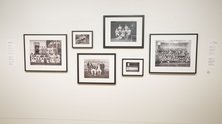
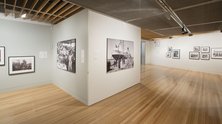
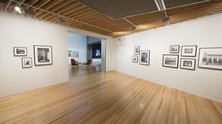
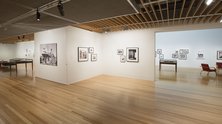
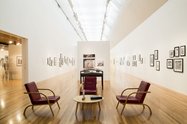
New Zealand Photography Collected functions correct now as the tip of a big and complex iceberg that is this country's national museum. But as it'south the merely part visible it must now exist addressed equally the exhibition information technology claims to exist.
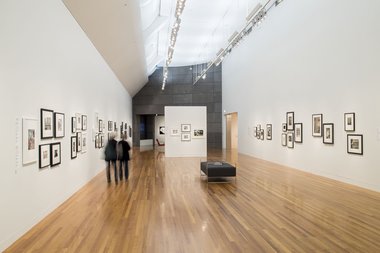
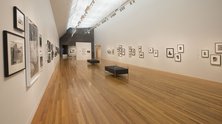
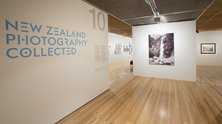
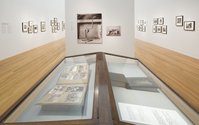
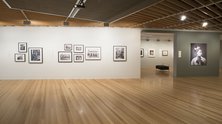
First of all, big is not necessarily better, and equally an exhibition information technology'due south something of an endurance test to process, even for aficionados of photography. Secondly, given the lay-out on Level 5 it's non like shooting fish in a barrel to go your bearings equally to where the show might start: the wall-sized introduction signage is over to the right, with galleries of photographs beckoning beyond, only straight ahead is the gallery where the chronology largely ends. Thirdly, while each of the images is labelled as-per-usual with title, photographer'south proper name, engagement etc, the larger, more full general labels in each space intended to link the bodies of images are then full general and having to encompass so many different images and spans of time they are virtually meaningless and don't provide the linkages required to make sense of the vast aggregation.
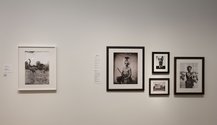
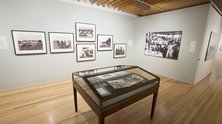
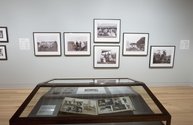
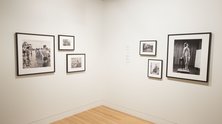
Anyone tempted to suspect that many of the plates in the book had been chosen to illustrate the story - rather than the other style circular - would have grounds for scepticism as to why this exhibition exists. Without the volume's story providing a guiding framework, too many of the images seem similar fish stranded on a desolate shore, gasping for the oxygen of context. About the chronological cease there's a free-standing screen on ane side of which are four photographs: by Laurence Aberhart, Les Cleveland, Andrew Ross and Peter Black. These four images are together in the bear witness only because they're in the book, and the fact they're together in this configuration is simply considering they fit on this screen of a wall. The only connecting element is they're all male person photographers. Call back, i of the central planks of the Te Papa project was context - objects no longer discrete art objects but objects set securely within a cultural, social and even political context. The just context in which these iv photographs finally brand sense is as nails in the coffin of Te Papa's credibility in the affair of the promised context.
The exhibition aims to showcase the range of the museum's photographic collection and attempts to achieve this through the framework of a chronological history of photography in New Zealand. While the book - very minimally - includes drove works not of this state's origin in a largely pointless gesture towards context, the exhibition itself reverts to the customary nationalist angle equally if the rest of the globe didn't exist. Of course, when it comes to the medium of photography - the most seamless international visual medium ever - this is the least sustainable opinion of all.
The historical account underpinning this exhibition hardly strays across the narrow path of the conventional, and tends to be more coherent the further dorsum one goes (20). Oddly, if only the menstruation afterward about 1970 could've been more conventional instead of being unfathomable. Only there could exist a reason for this. Athol McCredie made his name putting together exhibitions pre-dating this catamenia (21) and there is no conspicuous instance of his either curating or writing nigh contemporary photography over that catamenia (22). Of course, it'southward never easy to become a fix on your ain time, especially one so broad and volatile as photography's has been since the 1970s.
At that place are two major issues. Firstly and seriously, the highly significant human relationship between evolving feminism and developing contemporary photographic practice in the country from the mid-1970s is inappreciably mentioned let alone addressed visually. In the early '70s there was practically a revolution in photography hither, and as with elsewhere in the Western tradition (that elephant in the room) it was dominated by the very masculine, black and white documentary style. Feminism was a parallel revolution then, and it had major affect on not merely what photographs looked like only how they were done. The exhibition contains only two photographs "covering" this phenomenon (23): both blackness and white images, by Rhondda Bosworth and Jane Zusters. Fifty-fifty stranger, many women opted to use the Polaroid SX-lxx every bit their means of expression, and these tiny and blurry gems of colour became a kind for symbol for both a more personal arroyo and signalling a refusal to purchase into the documentary way (24). It's not that the Te Papa collection lacks myriad examples of the apprehensive Polaroid, but there isn't a single example in either exhibition or book.
Te Papa prides itself on its bi-cultural stance - but effectively information technology seldom strays beyond having labels in both languages. A more than recent revolution here over the past forty years has been an awakening of Māori consciousness, for both tangata whenua and Pakeha. And over the past decade or so Māori - most of them women - have joined the ranks of contemporary photographers, using the medium in its honoured office of bringing discomfort to the comfy as well as illuminating in a unique way aspects of maoritanga. Whether Te Papa has caught up with this in terms of collecting is hard to tell, only the miracle is, practically, totally absent from this exhibition (25).
New Zealand Photography Nerveless is fundamentally a display of the contents of a book rather than an exhibition, and while it's interesting to run across - at last - some of the riches of the drove, the display'due south over-arching book and incoherence almost abolish out its value. Given the manner Te Papa is run, it'll be assumed that "the large New Zealand photography show" has been done, leaving its hapless "customers" waiting in a queue another two decades long.
Peter Ireland
(1) See Examining Te Papa's Photography past Andrew Paul Forest, posted 10.12.xv
(two) Under then Prime Minister and lawyer Geoffrey Palmer the site was somewhen allocated for a new Loftier Courtroom edifice.
(3) An case is Tairawhiti Museum's recent W J Crawford photography exhibition (see this writer's piece on this site xiv March 2016), an extensive survey of a pregnant historical photographer from the later 19th century, and a show nominated for this year's Museum Aotearoa Awards. In its 18 years Te Papa has never done such an exhibition, and given the central part such photographers played in the colonisation procedure as well as establishing what's termed "national identity" - both of which just might be of involvement to such a nationalist institution - this lack is both inexplicable and lamentable.
(4) One vivid spot throughout has been the many laurels-winning publications out of Te Papa Printing, an skillful and innovative team which later last year was decimated by the actions of the current regime. The present CEO may take been heard to express the opinion that no i reads books anymore, only even minimal enquiry would reveal that this is, in fact, a golden age of fine art publishing by galleries and museums globally.
(5) Equally Jim Barr pointed out during his tenure at the Dowse, during another fuss almost McCahon that erupted within the then Lower Hutt Urban center Council, when someone suggested it attracted public attending he said, "So does a car crash."
Over again, when Te Papa's most pop exhibition ever opened in 2014 - Weta's electric current accept on Gallipoli - the Barrs pointed out on their blog Over the net the show'southward close resemblances to Soviet Realism - a triumph of crowd-pleasing political manipulation in either case.
(half-dozen) This was the championship of a piece of work by YBA Tania Kovats included in an exhibition of contemporary British artists toured by the British Council (but curated by Australian Berenice Potato). It was originally slated to exist shown at Wellington's City Gallery, but considering the building had to be airtight unexpectedly at the time, Te Papa took it on - which deepened the controversy because of its beingness the national museum with branding claims to be "Our Place". Many religious people, specially Roman Catholics, felt it wasn't their place at all and protested vociferously appropriately.
(vii) The current Tate manager, Nicholas Serota, when responding to questions about his perhaps imminent retirement said: "The trustees are absolutely committed to the idea of somewhen appointing someone with a curatorial background who will drive the public-service ethos of the institution rather than just run it." The Fine art Newspaper, 2 June 2016. The Tate doesn't need a corporate structure to have a brand-recognition any visitor would green-eyed.
(viii) In true corporate manner, the latest restructure, considering information technology comes and so close on the heels of the previous - clearly failed one - is called a "re-alignment", now patently in a "renewal" phase. It might seem a shame the word "exhibitions" doesn't start with "r".
(9) Including, it would seem, the moniker "Our Place". Given all the secrecy surrounding long-term plans and the restructures, the evidence might suggest information technology's become "Their Identify".
(10) The previous CEO Michael Houlihan spoke nearly this with apparent conviction at two Te Papa openings: Brian Brake'due south in 2010 and Kahu Ora/Living Cloaks in 2012. The only development in this direction was a new exhibition infinite in the onetime library'southward location: there were virtually three successive shows there, just since the last one closed a year ago - a history of Air New Zealand - it's been a crate store.
(xi) The quality of Te Papa's direction must be seriously questioned over the matter of the serial of semi-permanent exhibitions installed for Solar day One in 1998. One of the Te Papa projection promoters' central planks was the new museum would accept none of the long-running shows characterising the fuddy-duddy institutions it would replace. Well, ten years into its history surely someone at Te Papa may have begun because the staged replacement of these aged Day One shows such as Golden Days, Crawly Forces, Passports and Mountains to Sea. Merely, final yr, xv years after the new museum opened at that place was a sudden panic almost this major issue, and because the financial implications were major, as suddenly many medium and longer-term projects have had to be postponed or cancelled.
(12) Merely some of them will be raised after, particularly in terms of mail service-1970s imagery.
(13) Regarding the National Fine art Gallery, during the 1980s the only guaranteed fund for acquisitions included in the almanac government grant was $6000, and that, strictly legally, was reserved for the repatriation of NZ art works. Any other funds for purchases had to exist obtained by application to the Lotteries Commission and other contestable sources. In comparing Te Papa's funding is almost unimaginably generous.
(14) For the half dozen years between 1984 and 1989 the National Fine art Gallery mounted the following:
1984
Glenn Busch'southward Working Men (in-business firm & national tour)
Monochromes (Usa photographers from permanent collection)
1985
The Trunk in Question (from permanent collection)
Pairs: Laurence Aberhart and Walker Evans (from permament collection)
International Photography 1920-1980 (from the National Gallery of Australia)
Chelsea Project (five NZ photographers, toured by Auckland Art Gallery)
Henri Cartier-Bresson: photographer (toured by International Center of Photography, NY)
Posing a Threat (from permanent drove)
1986
Peter Peryer (toured by Sarjeant Gallery)
Bruce Connew'southward Southward Africa (in-house & national bout)
Ritual in New Zealand Photography (from permanent drove)
The Trained Eye (from permanent collection)
1987
George Gamble (toured by Dunedin Public Art Gallery)
Politics and Photographs (from permanent collection)
Hollywood Portraits from Keri de Carlo Collectionorth (collaboration with NZ Flick Archive)
1988
Barbara Kruger (in-house, at Shed eleven)
Richard Misrach: Desert Cantos (in-house & national bout)
Rodchenko every bit photographer (toured by Museum of Modern Art, Oxford)
Peter Blackness's Foliage portfolio (in-house, from permanent drove)
Mysterious Coincidences: contemporary British colour photography (toured by Photographers Gallery, London)
1989
Frank Hofmann'southward Object & Style: photographs from four decades (in-house & national tour)
From Today Painting is Dead (at Shed 11 - over 200 images from permanent collection)
Cindy Sherman (in-house, at Shed xi, later tour to Waikato Museum)
(15) In 2003 John Kinder's New Zealand toured from the Auckland Fine art Gallery, and in 2007 Peter Black's Leafage portfolio was show aslope Mapplethorpe's bloom portfolio Y - very like the NAG's pairing of Aberhart and Evans back in 1985. Very occasional small displays of images in Te Papa'south tiny Ilot Room, the ante-room to Level 5 or the aforementioned Level's works on newspaper gallery (not much bigger than a double chamber) hardly qualify as "exhibitions".
(16) Michael Houlihan, 'Footing-breaking: Te Papa a Capital Treasure', The Dominion Post, 29 July 2013, p.C24.
(17) See this writer's piece 'Flexing @ Our Place' in New Zealand Journal of Photography, no.52, Spring 2003, pp 17-xix.
(eighteen) It's generally understood that doing the Brake testify was not exactly Te Papa's photography curator's first pick of a projection on this scale.
(19) It appears that mounting this show was an thought coming late in the piece, and seems to have originated in the marketing rather than the curatorial department.
(xx) This may be an illusion, because the further nosotros go back in time there are fewer people left to argue with our interpretation of information technology.
(21) Witness to Change: life in New Zealand, photographs 1940-1965 (John Pascoe, Les Cleveland and Ans Westra), with Janet Bayly, PhotoForum/Wellington, 1985; Fields of Golden Daffodils; themes in New Zealand newspaper and magazine photography 1890-1970, National Library Gallery, Wellington, 1991; Brian Brake Lens on the World, with five others, Te Papa Press, Wellington, 2010. His invitee-curated show in 1987 Politics and Photographs for the National Art Gallery from the permanent drove is the honorable exception.
(22) McCredie's Rear Vision of 1988, a history of PhotoForum/Wellington, is more nearly the development and achievements of the grouping than a critical analysis of the photography.
(23) There are, though, one-half a dozen images by Frank Hofmann. European New Objectivity-styled images are a notable characteristic in this country'due south photographic history (more in retrospect, though), but that Modernist move was of very piffling consequence compared to the influence of feminism in the 1970s and '80s.
(24) Not considering it lacked worth, only because it was so male. In any instance, women invented their ain kind of documentary way, perhaps best exemplified in the photographs and films of Joanna Margaret Paul.
(25) One of Fiona Pardington's hei tiki is included, simply whether that's adding much to tino rangatiratanga is very open to question.
Print | Facebook | Twitter | E-mail
Source: https://eyecontactmagazine.com/2016/06/performance
0 Response to "James Turrell Dan Flavin Doug Wheeler Robert Irvin Living With Art Comparison"
ارسال یک نظر